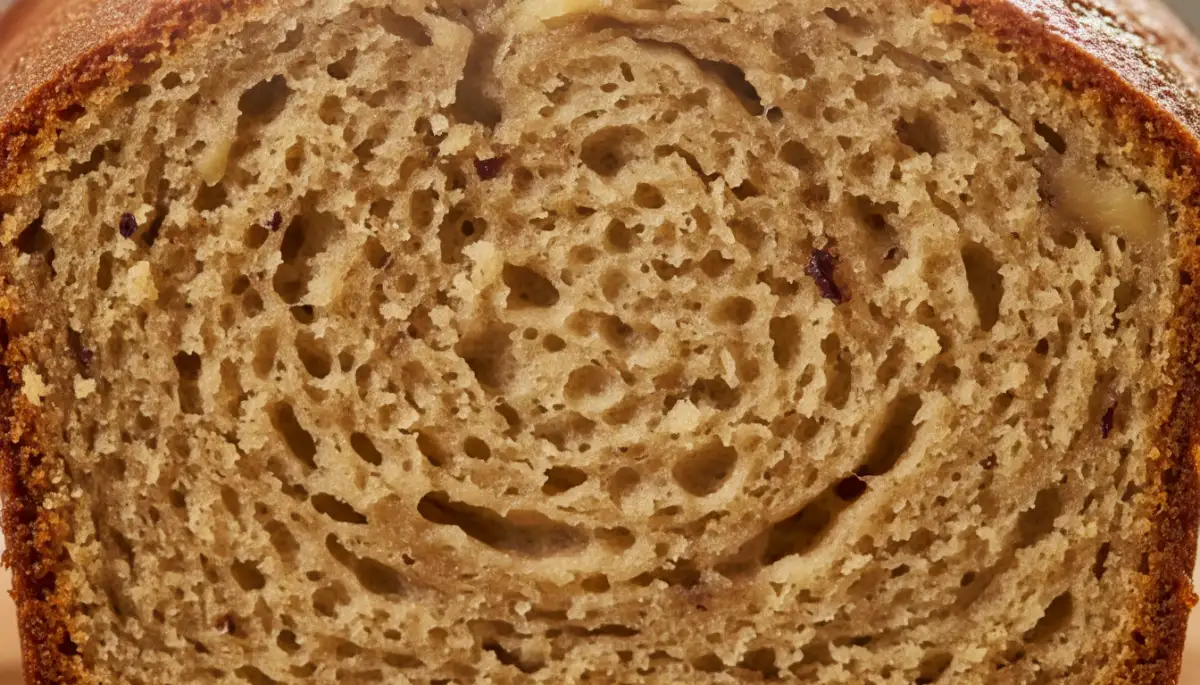
Have you ever pulled a gorgeous, golden-brown banana bread from the oven, eagerly sliced into it once it cooled, only to ask yourself: "Why is my banana bread gummy in the middle?" It is one of the most frustrating baking heartbreaks. You followed the recipe, the kitchen smells heavenly, the crust looks perfectly crisp, but the center resembles a dense, gluey, wet sponge. As a professional food writer and avid baker, I can assure you that you aren't alone. That rubbery texture comes down to a delicate balance of moisture, oven temperature, and structural science. Today, we are going to troubleshoot exactly what went wrong and how you can achieve a wonderfully light, moist, and fully baked crumb every single time.
Recipe Video: Step-by-Step Tutorial
Watch this quick visual guide to see exactly how the batter should look before baking, and learn the foolproof techniques to ensure your center bakes through perfectly.
The Science Behind the Gummy Center
Baking is essentially edible chemistry. Quick breads, like banana bread, rely on chemical leaveners (baking soda or baking powder) rather than yeast to rise. When a loaf turns out gummy, it means the starches in the flour failed to gelatinize properly, and the internal structure couldn't support the amount of moisture present.
The middle of the loaf is the last part to heat up. If the crust sets and burns before the heat can penetrate all the way to the core, you are left with an unbaked, gluey trap of mashed fruit and raw flour.
Top Culprits Ruining Your Banana Bread
Understanding the "why" is the first step to fixing the problem. Here are the most common reasons your banana bread is gummy in the middle:
1. Too Much Moisture (The Banana Trap) Bananas vary wildly in size. If a recipe calls for "3 bananas" and you use three massive bananas, you've just added significantly more water and sugar to your batter than the recipe author intended. This excess liquid makes it impossible for the flour to absorb everything, leaving a wet core.
2. Oven Temperature is Too High If your oven runs hot, the outside of your loaf will brown and form a crust rapidly. This hard crust acts as an insulator, preventing heat from reaching the center. You pull the loaf out because it looks done, but the inside is still raw.
3. Overmixing the Batter Once you add flour to wet ingredients, gluten begins to form. While you want strong gluten in pizza dough, you want very little in quick breads. Overmixing creates a tough, elastic structure that traps moisture, leading to a dense and rubbery texture rather than a fluffy one.
4. Cutting the Loaf While Hot I know the temptation is immense, but slicing into a steaming loaf of banana bread is a cardinal sin in baking. As the bread cools, the residual heat finishes baking the center, and the starches settle. Slicing it hot lets all the steam escape instantly, collapsing the crumb and leaving the remaining loaf gummy.
Secret Chef Tips
To guarantee bakery-style perfection, keep these professional secrets in your back pocket:
Weigh Your Mashed Bananas: Always measure your mashed bananas by volume or weight. Aim for exactly 1 cup (about 225 grams). If you have extra, save it for a smoothie!
Use an Oven Thermometer: Never trust your oven's digital display. An inexpensive internal oven thermometer will tell you if your 350°F is actually 375°F.
The Foil Tent Trick: If you notice the top of your banana bread getting too dark at the 45-minute mark, loosely place a piece of aluminum foil over the top. This stops the crust from burning while allowing the center the time it needs to finish baking.
The Right Pan Matters: Dark metal pans absorb heat faster than light metal or glass, which can cause the outside to bake too quickly. If using a dark pan, reduce your oven temperature by 25°F.

Detailed Step-by-Step Guide to the Perfect Loaf
Achieving the perfect texture is easy once you master the technique. Here is how to walk through the process flawlessly:
Step 1: Prep and Measure Set your oven to 350°F (175°C). Ensure your baking soda is fresh (expired leavening agents won't lift the heavy batter, resulting in a dense loaf). Mash your bananas thoroughly and measure out exactly 1 cup.
Step 2: Combine Wet Ingredients In a large bowl, whisk together your measured bananas and melted butter. The fat coats the proteins, which will help inhibit gluten formation later. Whisk in your sugar, egg, and vanilla until completely homogeneous.
Step 3: The Gentle Fold Sprinkle your flour, baking soda, and salt over the wet ingredients. Switch from a whisk to a rubber spatula. Gently fold the mixture from the bottom up. Stop the very second the last streak of white flour disappears. It is perfectly fine if the batter looks a little lumpy!
Step 4: Bake Patiently Pour the batter into your greased pan and place it in the center of the middle oven rack. This ensures even air circulation. Bake for 55 to 65 minutes. Do not open the oven door for the first 45 minutes, as the sudden draft of cold air can cause the rising bread to sink.
Step 5: The Ultimate Skewer Test A standard toothpick is too short for a deep loaf pan. Use a long wooden skewer or a raw piece of spaghetti. Plunge it into the absolute deepest, dead-center part of the loaf. If it comes out with wet batter, keep baking. If it comes out with a few moist crumbs, it's ready.
Step 6: The Crucial Cooldown Let the bread rest in the pan for 10 minutes. This gives it enough stability to be moved. Turn it out onto a wire cooling rack and let it cool for at least one hour before taking a knife to it.
Frequently Asked Questions (FAQ)
Can I fix underbaked banana bread?
If you've already sliced into your banana bread and discovered a gummy center, you can't re-bake the whole loaf successfully. However, you can slice the remaining bread into thick pieces and toast them in a skillet with a little butter, or bake the slices flat on a baking sheet at 350°F for 5-10 minutes to finish cooking the center perfectly.
How many bananas is too many for banana bread?
Most standard banana bread recipes are formulated for 1 to 1.5 cups of mashed bananas (usually 3 medium bananas). Adding 4 or 5 bananas introduces too much moisture and weight, overwhelming the flour and baking soda, which almost guarantees a wet, gummy center.
Why did my banana bread sink in the middle?
A sunken center is typically caused by underbaking, opening the oven door too early, or using expired baking soda. The structure of the bread hasn't fully set, causing the wet, heavy center to collapse under its own weight as it cools down.
Does the type of flour affect the texture?
Yes! Using bread flour instead of all-purpose flour will add too much protein, creating excess gluten and a chewy, gummy texture. Stick to all-purpose flour, or substitute up to half of it with whole wheat flour for a slightly denser, but fully baked, rustic loaf.
Baking is a journey of trial and error, but armed with these tips, you'll never have to wonder "why is my banana bread gummy in the middle" again. Embrace the process, respect the cooling time, and enjoy the perfect slice of warm, fluffy banana bread. Happy baking!
Warmly,
Sarah Baker