The Best Gluten-Free Banana Bread (Almond Flour)
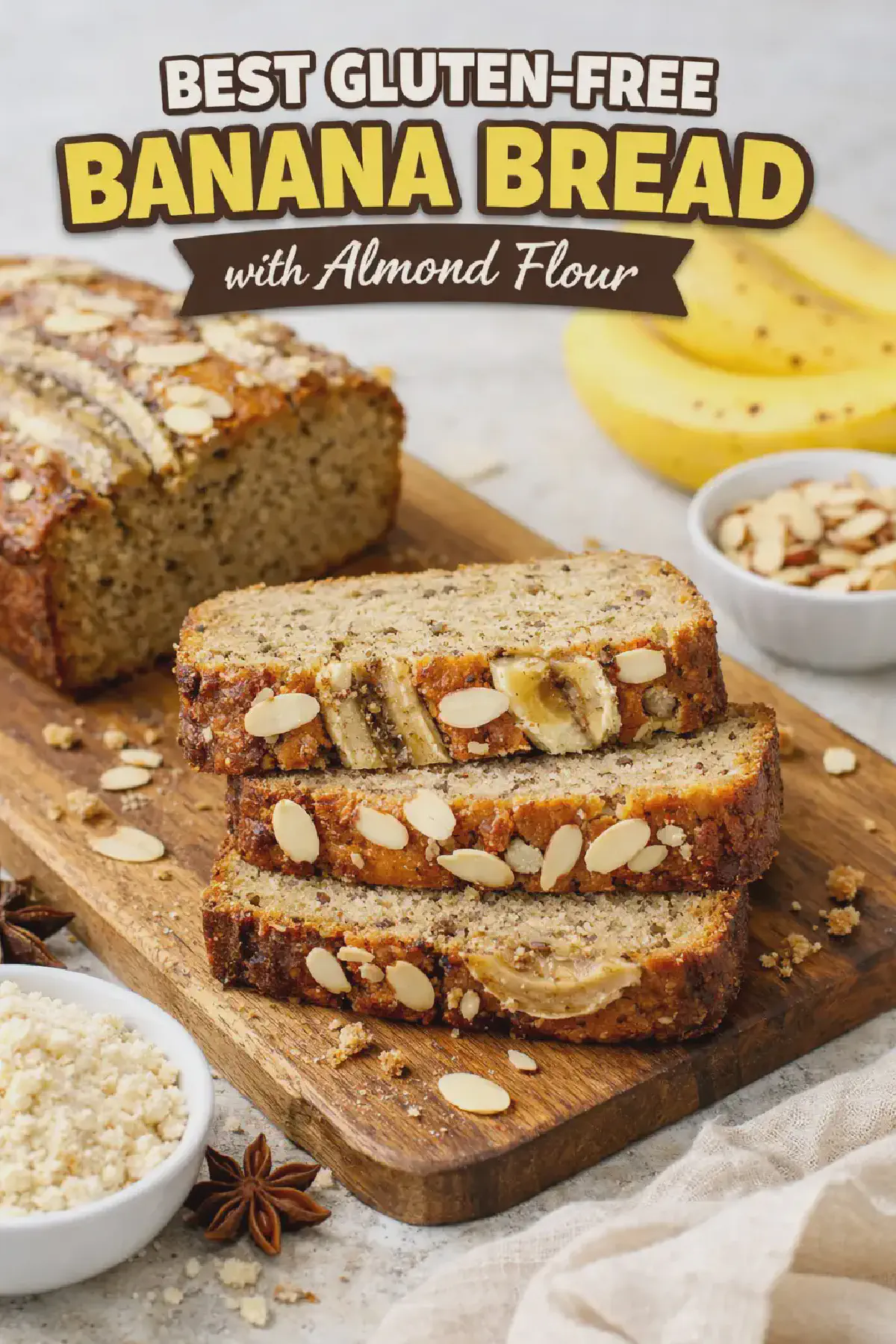
Moist, nutty, and naturally sweet. This scientifically perfected gluten-free banana bread uses almond flour for a tender crumb that rivals any wheat loaf.
There is a pervasive myth in the culinary world that gluten-free baking requires a sacrifice in texture—that one must accept a dry, crumbly, or gummy mouthfeel as the price of admission. I am here to dismantle that notion entirely. When we approach baking as a science, we understand that gluten is simply a structural protein. When we remove it, we must replace it with an alternative architectural support system.
In this specific formulation for Banana Bread, we utilize the unique lipid profile and protein structure of almond flour. Unlike wheat flour, which relies on the elasticity of gluten strands to trap air, almond flour provides a dense, rich, and incredibly moist crumb due to its high fat content. When combined with the pectin and natural sugars found in over-ripe bananas, the result is a loaf that is not just “good for gluten-free,” but superior to many traditional wheat-based recipes. The aroma of caramelized fructose and toasted nuts that fills the kitchen is merely the prelude to a sensory experience defined by a luxurious, velvet-like density that melts on the palate.
The Alchemy of Almonds: Engineering the Perfect Crumb
To understand why this recipe works, we must look at the hydrocolloids and lipids at play. Traditional banana bread relies on the gelatinization of wheat starch and the coagulation of gluten. In this almond flour iteration, we are orchestrating a different chemical dance.
Almond flour is essentially ground nuts, meaning it is low in carbohydrates but high in monounsaturated fats. In baking, fat acts as a “shortener,” interfering with protein bonding to create tenderness. However, because we want structure, we rely heavily on the eggs and the binding properties of the banana. The eggs provide the albumin protein matrix that sets upon heating, holding the almond meal in suspension.
Furthermore, the absence of gluten means there is no risk of “over-mixing” the batter, which in wheat bread leads to toughness. However, we must be careful with the moisture balance. Almond flour does not absorb liquid the way wheat flour does; it sits alongside it. This is why the ratio of banana to flour is critical. Too much banana, and the excess water has nowhere to go, leading to a pudding-like center. This recipe uses a precise ratio to ensure the moisture evaporates at the same rate the protein structure sets.
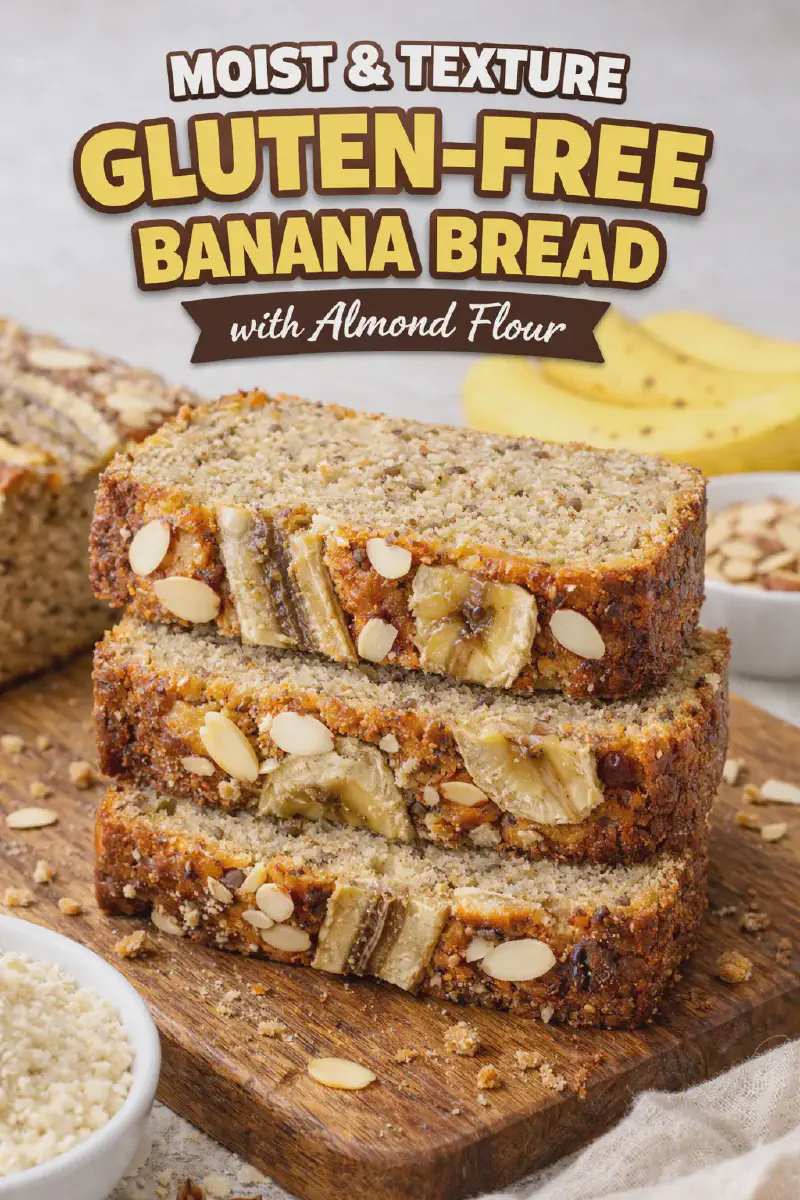
Sourcing for Success: The Component Breakdown
The difference between a mediocre loaf and a world-class confection often lies in the specific quality of the ingredients chosen. As a culinary scientist, I insist on specificity.
- Super-Fine Blanched Almond Flour: Do not use “almond meal.” Almond meal contains the skins, which add a gritty texture and bitterness. Blanched almond flour has the skins removed and is ground to a fine powder, mimicking the particle size of wheat flour. This is non-negotiable for a cake-like crumb.
- The Bananas: We need enzymatic activity here. As bananas ripen, the enzyme amylase converts starch into sugar. For this recipe, your bananas should be more black than yellow. This not only sweetens the bread naturally but also increases the liquidity of the fruit, acting as a better humectant to keep the loaf moist for days.
- The Sweetener Variable: I prefer maple syrup or honey over granulated sugar for this application. Liquid sweeteners add hygroscopic properties (water-attracting), which helps the almond flour retain moisture after baking. The acidity in maple syrup also reacts slightly with the baking soda, aiding the rise.
- Room Temperature Eggs: Cold eggs introduced to fat-heavy almond flour can cause the fats to seize or clump. Room temperature eggs emulsify much more easily, creating a uniform batter that rises evenly.
Diagnosing the Crumb: A Baker’s Matrix
Even with a perfect recipe, environmental variables can affect the outcome. Here is a technical breakdown of common issues and their scientific solutions.
| Issue | Root Cause | The Scientific Fix |
|---|---|---|
| Sinking Middle | Under-baking or excess hydration. | The internal structure didn’t reach the coagulation point (approx 200°F/93°C). Cover with foil and bake 10-15 mins longer. Ensure bananas weren’t extra large. |
| Gummy/Wet Texture | Improper cooling or low oven temp. | Almond flour releases moisture as it cools. Cutting too soon traps steam, condensing it back into water. Let it cool completely. Check oven calibration. |
| Dark/Burnt Top | Maillard reaction occurring too fast. | Almond flour browns faster than wheat due to high fat/protein content. Tent the loaf with aluminum foil after the first 30 minutes of baking. |
| Dense/Heavy Loaf | Expired leavening agent. | Baking soda loses potency over time. Test your soda in vinegar; if it doesn’t fizz aggressively, replace it. The acidity of the bananas needs active soda to create CO2 lift. |
Elevating the Loaf: Techniques from the Lab
To transition from a home baker to a culinary expert, you must adopt professional habits. These tips ensure consistency and excellence in every bake.
- Weigh Your Flour: Measuring by volume (cups) is notoriously inaccurate. Almond flour is easily compressed. Ideally, weigh your flour (approx. 112g per cup). If you must use cups, use the “spoon and level” method—spoon flour into the cup and level it off; never scoop directly from the bag.
- The Resting Phase: After mixing your wet and dry ingredients, let the batter sit on the counter for 10 minutes before baking. This allows the almond flour to hydrate fully and the leavening agents to begin their initial reaction, resulting in a better dome.
- Internal Temperature Check: The most accurate way to tell if gluten-free bread is done is a digital thermometer. You are looking for an internal temperature of 200°F to 205°F (93°C - 96°C). This ensures the eggs have fully set the structure without drying out the crumb.
- Create a “Handle”: When lining your pan, leave parchment paper overhanging on the two long sides. This creates a sling that allows you to lift the heavy, fragile loaf out of the pan without inverting it, which preserves the top crust.
- The Toast Factor: While delicious fresh, the high fat content of almond flour makes this bread exceptional when toasted. The direct heat caramelizes the sliced surface, creating a crunchy exterior that contrasts beautifully with the soft interior.

The Best Gluten-Free Banana Bread (Almond Flour)
Ingredients
Instructions
- Preheat and Prep: Preheat your oven to 325°F (165°C). Line a standard 9x5 inch loaf pan with parchment paper, allowing overhang on the sides for easy removal.
- The Wet Mixture: In a large mixing bowl, mash the bananas until nearly liquid but retaining small lumps for texture. Whisk in the eggs, maple syrup, vanilla extract, and vinegar until fully emulsified.
- The Dry Integration: In a separate bowl, whisk together the almond flour, baking soda, cinnamon, and salt to break up any clumps. Gently fold the dry ingredients into the wet mixture using a spatula until just combined. Do not overwork.
- The Bake: Pour the batter into the prepared loaf pan and smooth the top. Bake for 50-60 minutes. A toothpick inserted into the center should come out clean or with a few moist crumbs.
- Cooling Phase: Let the bread cool in the pan for 10 minutes, then lift it out using the parchment paper and transfer to a wire rack to cool completely before slicing.
Nutrition
Calories: 225 kcal | Protein: 7g | Fat: 14g | Sugar: 12g