Miracle 15-Minute Ripe Bananas: The Oven Hack That Saves Baking Day
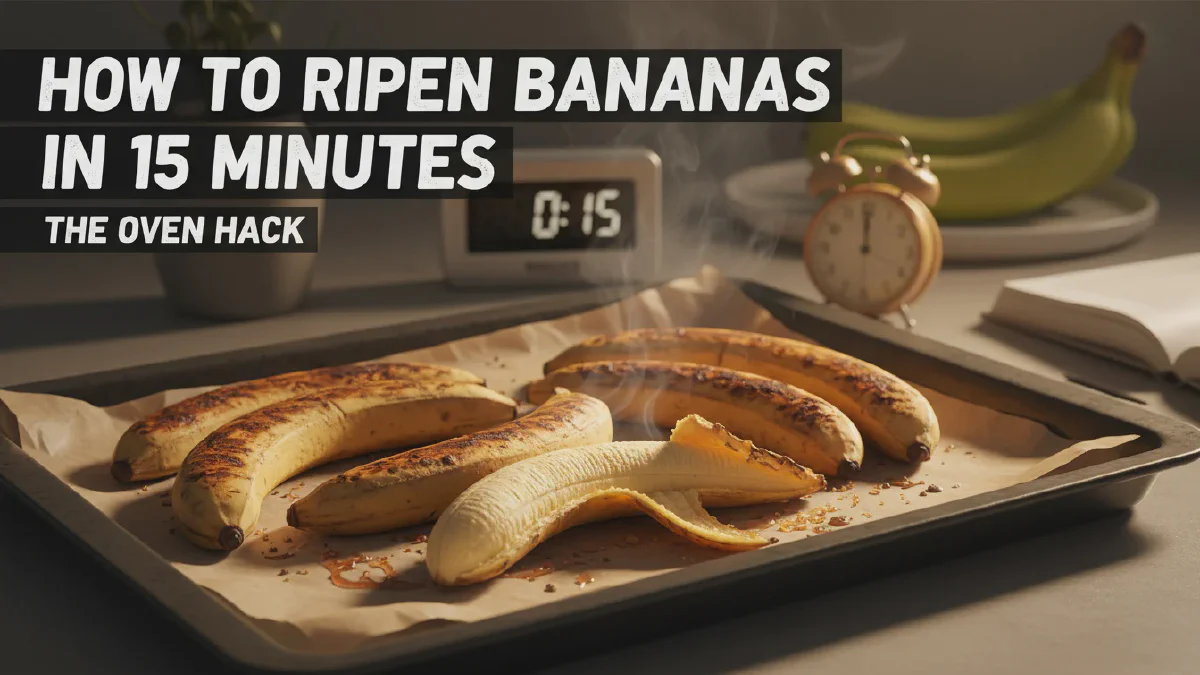
Forgot to buy ripe bananas? Don't wait 5 days. Learn the food science secret to turning yellow bananas into sweet, baking-ready fruit in just 15 minutes.
Picture this: You have the flour measured, the butter softened, and a craving for moist banana bread that absolutely will not quit. You look at the fruit bowl, and what stares back? Bright, stubborn, starchy yellow bananas. They are days away from being ready.
As a culinary scientist, I know that waiting for ethylene gas to do its natural work takes time—time we often don’t have. But here is the good news: we don’t need days. We have physics, we have heat, and we have a simple thermal reaction that mimics nature in hyper-speed.
This isn’t just a “hack”; it is a manipulation of starch and sugar that saves baking day. Let’s turn those yellow fruits into sweet, mashable gold in under 20 minutes.
The Science of Accelerated Sweetness: Why Heat Works
When a banana ripens naturally, it produces ethylene gas, which triggers enzymes (specifically amylase) to convert hard starches into simple sugars. It also breaks down pectin, which is the “glue” holding the cell walls together, resulting in soft fruit.
When we toss bananas into the oven, we are essentially brute-forcing this process. The heat softens the pectin rapidly, collapsing the cell structure to create that mushy texture we need for batters. Simultaneously, the heat caramelizes the sugars already present in the fruit, deepening the flavor profile.
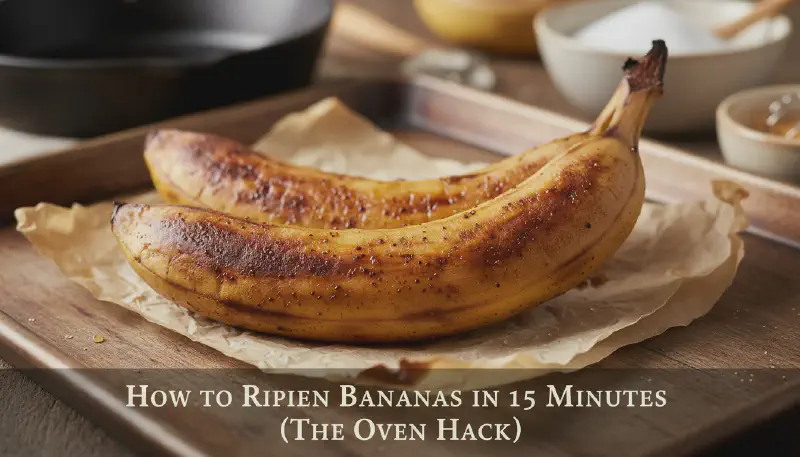
Note: While this method replicates the texture and sweetness perfectly for baking, it doesn’t create the exact same floral esters as a slow-ripened banana. However, once mixed with cinnamon, sugar, and flour, even the most trained palate struggles to tell the difference.
The Perfect Candidate: Not All Bananas Qualify
Before you preheat your oven, we need to talk about your starting material. This technique is powerful, but it is not magic.
- The Ideal Banana: Solid yellow. It can have green tips, but the body should be yellow. This fruit has enough developed sugar to be caramelized by the heat.
- The “Do Not Use” Banana: Hard, lime-green bananas. These are almost entirely starch. Heating them will soften the flesh, but they will taste like a bland potato rather than a sweet fruit. No amount of heat can create sugar where there is none to begin with.
Troubleshooting the Transformation: When Science Goes Sideways
Even simple chemical reactions can have variables. If your bananas aren’t behaving as expected, consult the table below to diagnose the issue.
| Issue | Likely Cause | The Fix |
|---|---|---|
| Bananas Leaking Juice | Cell wall rupture (Normal) | This is actually desirable! It creates “banana liquor.” Ensure you use parchment paper for easy cleanup. |
| Flesh is Hard Inside | Insufficient bake time | Put them back in! The skins must be pitch black. If they are still brown or spotted, they need more time. |
| Taste is “Vegetal” | Bananas were too green | Add 2 extra tablespoons of sugar or honey to your batter to compensate for the lack of natural fructose. |
| Skins Won’t Peel | Fruit is too hot | Let them rest for 5 minutes. The steam inside needs to settle so the skin separates from the flesh. |
Sarah’s Secret Vault: Elevating the Result
Most home cooks throw the bananas on a tray and call it a day. But if you want to extract the maximum flavor for your banana bread or muffins, follow these professional nuances.
First, save the juice. When the bananas leak, that liquid is pure, concentrated banana syrup. Scrape it off the parchment paper and add it to your batter—it is liquid gold for moisture.
Second, don’t puncture the skin before baking. Some guides suggest poking holes with a fork. I advise against this. Leaving the skin intact creates a pressure cooker effect inside the peel, steaming the fruit in its own juices and resulting in a creamier, more custard-like consistency.
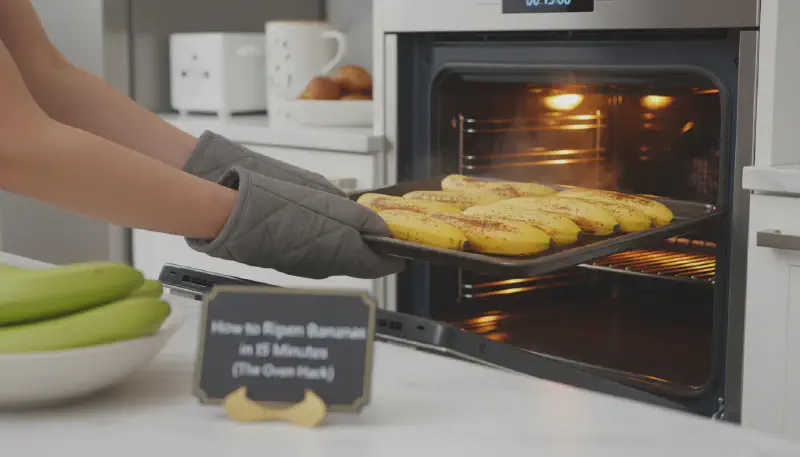
Finally, use the “Snip and Squeeze” method. Instead of trying to peel the messy, hot banana like normal, use kitchen shears to snip off one end of the black peel. Hold the banana over your mixing bowl and squeeze the other end like a tube of toothpaste. The flesh will slide out effortlessly, ready to be whisked into your next masterpiece.
Miracle 15-Minute Ripe Bananas: The Oven Hack That Saves Baking Day
Ingredients
Instructions
- Preparation: Preheat your oven to 300°F (150°C). Line a rimmed baking sheet with parchment paper to catch any leaking sugars.
- The Bake: Place the unpeeled bananas on the sheet, ensuring they are not touching. Bake for 15-20 minutes until the skins are completely black and shiny.
- Cooling: Remove from the oven and let them cool for 5-10 minutes. The fruit inside will be soft and ready to mash.
Nutrition
Calories: 105 kcal | Protein: 1.3g | Fat: 0.4g | Sugar: 14g