Foolproof Frozen Bananas for Baking: The Flash-Freeze Secret
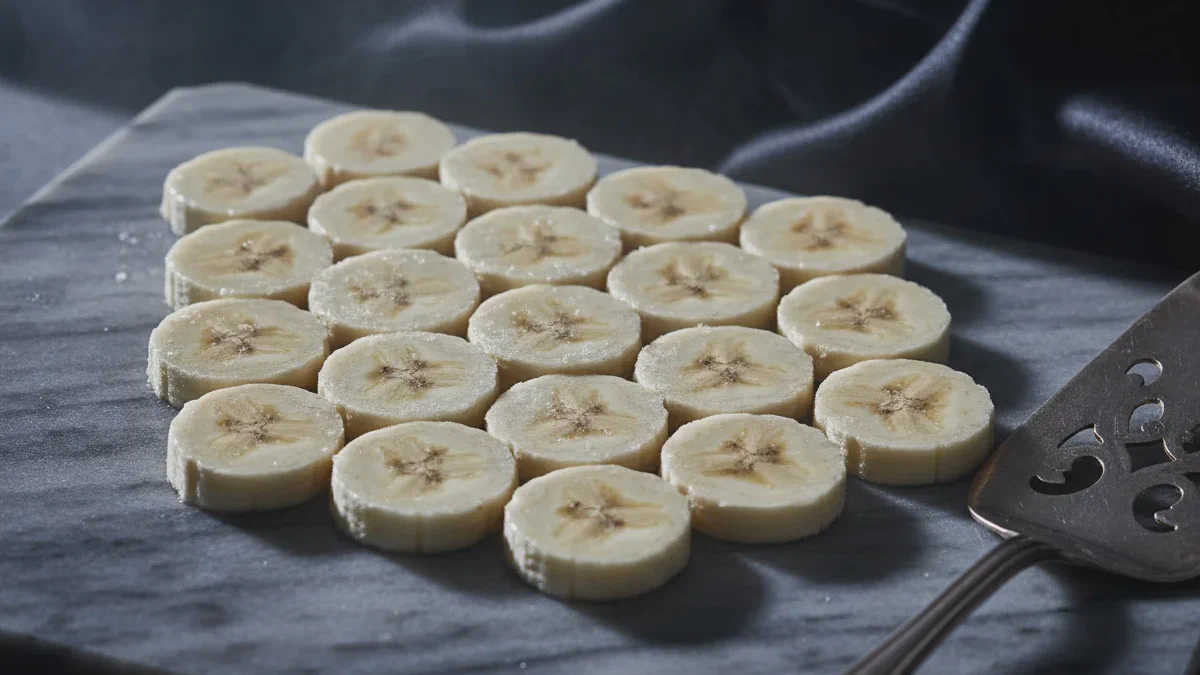
Stop throwing whole bananas in the freezer! Learn the culinary science behind flash-freezing bananas for perfectly sweet, accessible baking ingredients every time.
We have all been there. You stare at the fruit bowl, watching a bunch of bananas transition from a cheerful yellow to an ominous, spotted brown. The instinct is often to toss the entire bunch, peels and all, into the deep freeze and forget about them until a craving for banana bread strikes three months later.
Stop doing this.
As a culinary scientist, I can tell you that throwing a whole, unpeeled banana into the freezer is the “rookie mistake” of the baking world. You are essentially creating a future obstacle for yourself—trying to peel a slimy, thawing casing off a mushy interior is a sensory nightmare. More importantly, it impacts the accuracy of your baking measurements.
Today, we are ditching the chaos. I am going to teach you the Flash-Freeze Method, the industry standard for preserving fruit integrity, maximizing sweetness, and ensuring your future baking projects are effortless.
Cryogenics in Your Kitchen: Why Texture Matters
To understand why we freeze bananas a specific way, we need to look at the cellular level. Bananas are rich in water and pectin. When water freezes, it expands and crystallizes.
If you throw a bunch of bananas into a bag together while they are soft, they will fuse into a solid brick of ice. When you try to separate them later, you damage the fruit flesh. However, by using the flash-freezing technique (Individually Quick Freezing or IQF), we freeze the water content rapidly while the pieces are separated.
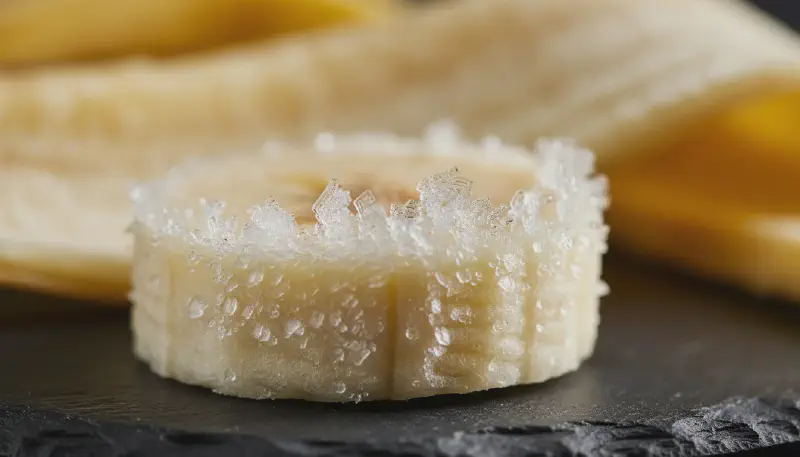
The Science of Sweetness: Freezing actually aids your baking. As the banana freezes and subsequently thaws, the cell walls rupture completely (lyse). This releases the liquid inside the cells, which is rich in amylase—an enzyme that breaks down starches into sugars. This is why banana bread made with previously frozen bananas is often moister and sweeter than bread made with fresh fruit.
The “Cheetah Spot” Rule: When to Freeze
Timing is the unsung hero of ingredient preservation. You cannot freeze a green banana and expect it to taste good in a cake later; the starches haven’t converted to sugar yet.
- Green/Solid Yellow: Too starchy. Result: Bland, dry baked goods.
- The Cheetah Spot (Target): Yellow skin with plenty of brown freckles. This is peak sugar content. The aroma should be floral and strong.
- Black/Oozing: Use immediately or discard. These have likely started to ferment.
Sarah’s Golden Rule: If you wouldn’t eat it raw because it’s just a bit too soft, it is scientifically perfect for the freezer.
Troubleshooting Your Frozen Stash
Even with the best techniques, freezers can be temperamental environments. Here is how to diagnose and fix common issues with your frozen fruit inventory.
| The Issue | The Scientific Cause | The Fix |
|---|---|---|
| The “Iceberg” Clump | Moisture on the surface of the fruit fused pieces together during freezing. | Bang the bag gently on the counter to break the seal. Next time, ensure bananas are dry and not touching during the flash-freeze stage. |
| Brown/Grey Color | Enzymatic browning (oxidation) caused by exposure to oxygen. | It is safe to use! For aesthetics in the future, toss slices in 1 tsp of lemon juice before freezing to inhibit the enzyme polyphenol oxidase. |
| Excessive Ice Crystals | Temperature fluctuations in your freezer (sublimation). | Your freezer might be in a defrost cycle too often. Double-bag your bananas or use a vacuum sealer to remove air gaps. |
| Liquid Pool on Thawing | Syneresis (weeping) from ruptured cell walls. | DO NOT DISCARD THIS LIQUID. It is “liquid gold”—pure banana sugar and flavor. Pour it right into your batter. |
The Baker’s Vault: Storage Hacks for Longevity
The difference between a home cook and a pro is often organization. When you are prepping for a high-volume baking season, you don’t want to be measuring frozen chunks of fruit.
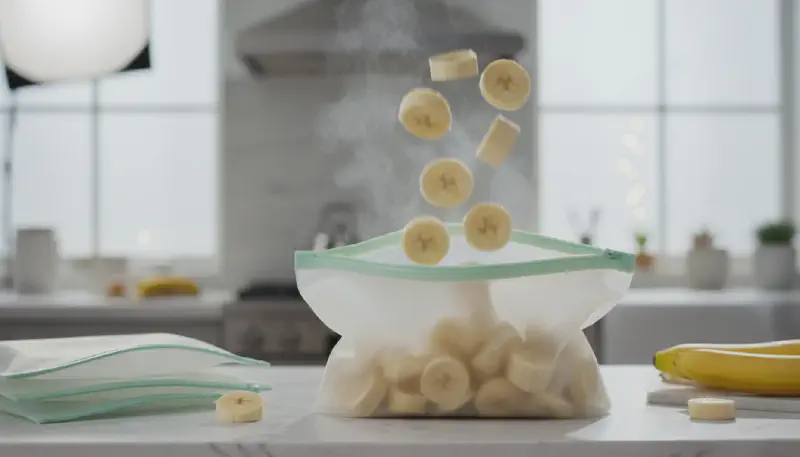
1. The “Recipe-Ready” Portion Don’t just fill a massive gallon bag. Most standard banana bread recipes call for 3 bananas (approx. 1.5 cups mashed).
- The Hack: Freeze your bananas in specific clusters. Put 3 sliced bananas into a small bag, then put those small bags into a larger container. When you want to bake, you grab one packet, thaw, and go. No measuring cups required.
2. The Straw Vacuum Seal If you don’t own a fancy vacuum sealer, use physics. Close your zip-top bag almost all the way, leaving a small gap. Insert a straw, suck out the air until the plastic clings tight to the fruit, and quickly seal the gap. Less air equals less freezer burn.
3. Label or Perish Frozen items all look alike after a month. Use a sharpie to write the Date and the Quantity (e.g., “3 Bananas - Dec 2025”). You think you will remember. You won’t.
By treating your ingredients with respect before they even hit the mixing bowl, you elevate your baking from “good” to “world-class.” Now, go save those spotted bananas!
Foolproof Frozen Bananas for Baking: The Flash-Freeze Secret
Ingredients
Instructions
- The Prep: Peel the bananas completely. Remove any fibrous strings.
- The Cut: Slice bananas into 1-inch rounds or cut them in half crosswise, depending on your baking needs.
- The Flash Freeze: Line a baking sheet with parchment paper. Arrange banana pieces in a single layer, ensuring they do not touch. Freeze for 2 hours until solid.
- The Storage: Transfer the frozen solid pieces into an airtight freezer bag. Squeeze out as much air as possible before sealing.
Nutrition
Calories: 105 kcal | Protein: 1.3g | Fat: 0.4g | Sugar: 14g