The Ultimate Walnut Banana Bread: Secret to the Perfect Crunch
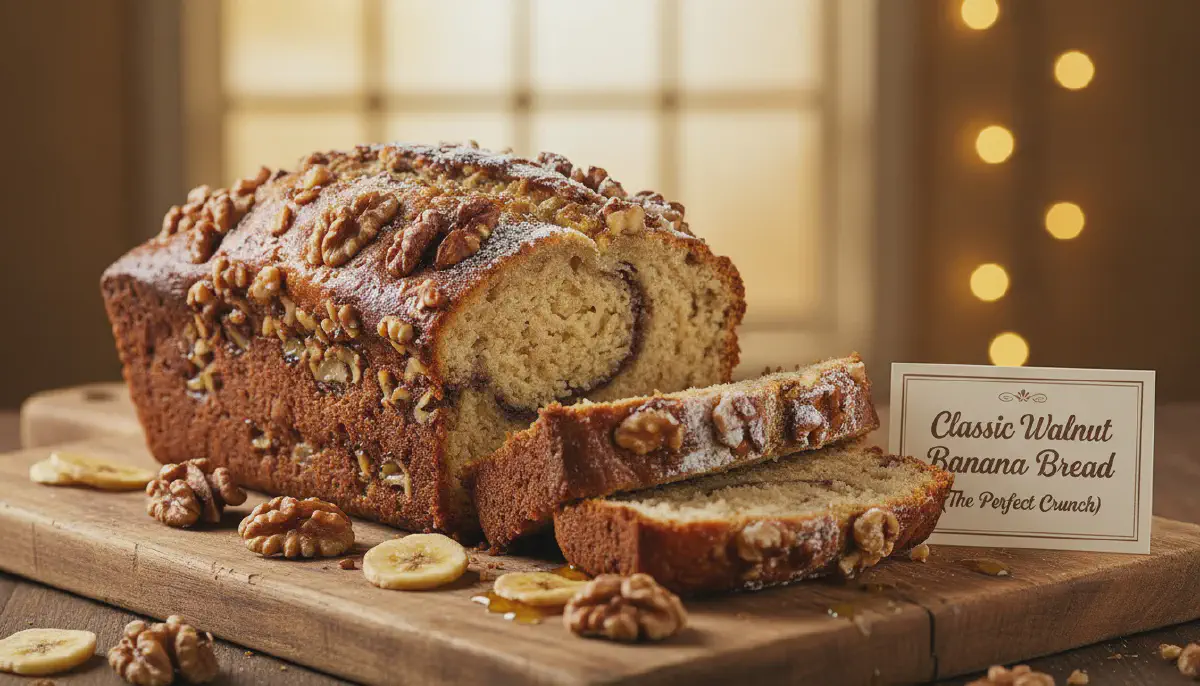
Discover the science behind the moistest walnut banana bread with the ultimate crunchy crust. Easy, fool-proof, and bakery-style results. Bake it today!
Let’s be honest: the internet doesn’t need another banana bread recipe. It needs the right one. We’ve all experienced the heartbreak of a loaf that looks golden on the outside but hides a gummy, dense center, or the disappointment of slicing into a bread where all the walnuts have plummeted to the bottom like lead weights.
This isn’t just baking; it’s culinary engineering. By balancing the hygroscopic nature of brown sugar with the structural integrity of toasted walnuts, we are creating a textural masterpiece. This version delivers a tender, custardy crumb contrasted by an aggressive, bakery-style crunch on the crust. It is the definitive guide to the only banana bread you will ever need to bake again.
The Architecture of Moisture: Balancing Crumb and Crunch
Why does banana bread fail? Usually, it is a battle between hydration and structure. Bananas are heavy and wet; flour provides the scaffold. If you have too much banana, the scaffold collapses (gummy bread). If you have too much flour, you get a dry brick.
The secret to the “Perfect Crunch” lies in a two-part thermal reaction. First, we rely on the Maillard reaction not just on the crust, but on the walnuts themselves. Pre-toasting the walnuts releases their volatile oils, preventing them from absorbing moisture from the batter, which keeps them snapping-crisp even days later. Second, we utilize a “sugar-shield” technique on the surface of the loaf to create a caramelized barrier that shatters delightfully upon biting.
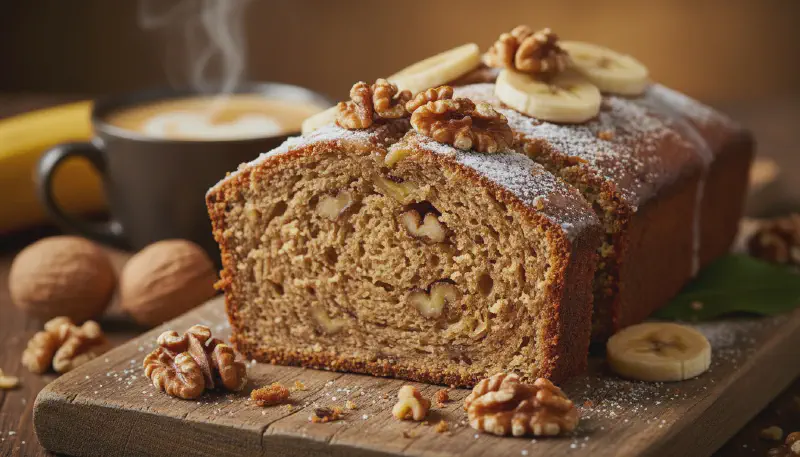
Pantry Alchemy: Selecting Components for Maximum Flavor
You cannot bake a world-class loaf with mediocre inputs. Here is the science behind what goes into your bowl:
- The Bananas (The Sugar Engine): We need total enzymatic breakdown. You want bananas that look like they are ready for the compost bin. We are looking for high fructose content to ensure a moist crumb without adding excessive refined sugar.
- The Fat (Flavor vs. Function): While oil guarantees a moist loaf, melted butter is non-negotiable here. It contains milk solids that brown during baking, adding nutty notes that compliment the walnuts. We offset the potential dryness of butter by using brown sugar.
- The Walnuts (The Texture): Use English Walnuts for their lower tannin content (less bitterness). They must be raw initially, then toasted by you. Pre-roasted salted nuts will ruin the chemical balance of the baking soda.
- The Acid (The Lift): Brown sugar is acidic. This acidity reacts with the baking soda (sodium bicarbonate) to create carbon dioxide gas, which gives us our lift.
SOS Classic Walnut Banana Bread (The Perfect Crunch): Expert Troubleshooting
Even the best recipes can face environmental variables. Here is how to troubleshoot like a pro.
| Issue | The Science (Cause) | The Fix |
|---|---|---|
| The “Sinking Nut” Syndrome | Gravity + Low Viscosity. The batter isn’t thick enough to hold the nut’s weight. | Flour Coat: Toss walnuts in 1 tbsp of the flour mixture before folding in. This increases surface friction. |
| Burnt Top, Raw Center | Oven runs hot or pan is too dark (absorbing heat too fast). | The Foil Tent: Tent the loaf with aluminum foil after 30 mins. It deflects radiant heat while conductive heat finishes the center. |
| Dense/Rubbery Texture | Gluten over-development. | The “Fold” Method: Never use a mixer for the dry ingredients. Use a spatula and stop when you see the last flour streak disappear. |
| Cracked Top | This is actually desirable! It indicates rapid oven spring. | Embrace it. It allows steam to escape, preventing a soggy interior. |
The Chef’s Vault: Pro Tips for the Ultimate Loaf
As a culinary scientist, I rely on repeatable techniques to ensure consistent excellence. Here are five secrets from my vault that elevate this recipe from “home cook” to “bakery tier.”
- The Temperature Shock: Start your oven at 425°F (220°C) for the first 10 minutes, then drop it to 350°F (175°C) without opening the door. This initial blast of heat activates the baking soda rapidly, creating a high, domed top (the “muffin top” effect).
- The “Ribbon” Stage: When mixing your sugar and melted butter (and egg), whisk until the mixture is pale and falls back into the bowl in a “ribbon.” This incorporates air mechanically before chemical leavening takes over.
- The Turbinado Hack: For that glass-like crunch on top, sprinkle coarse Turbinado or Demerara sugar over the batter just before baking. It doesn’t melt fully, leaving a crystalized crust.
- The Friction Factor: Do not chop your walnuts into dust. Hand-break them into quarters. You want distinct “boulders” of texture to contrast the soft crumb.
- The Maturation Period: Banana bread is one of the few baked goods that tastes better on day two. The moisture redistributes, and the banana flavor intensifies. If you can resist, wrap it and wait 24 hours.
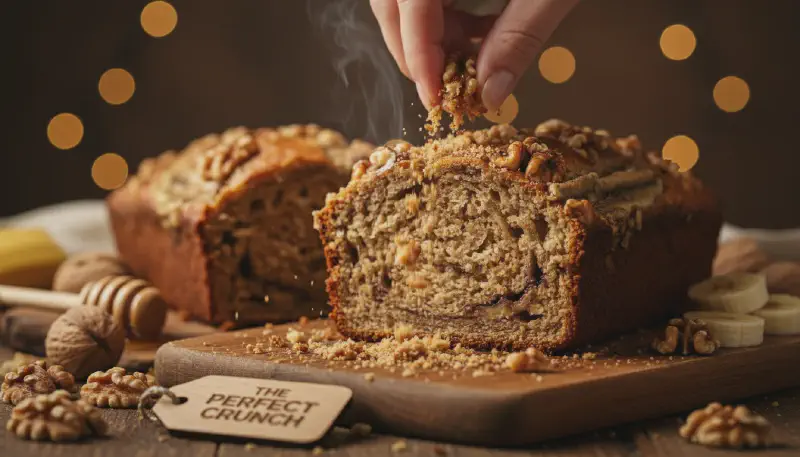
The Ultimate Walnut Banana Bread: Secret to the Perfect Crunch
Ingredients
Instructions
- The Flavor Awakening (Prep): Preheat your oven to 350°F (175°C). Spread your walnut halves on a baking sheet and toast for 5-7 minutes until fragrant. This step releases essential oils and ensures the nuts stay crunchy within the moist crumb. Grease a 9x5 inch loaf pan.
- The Emulsion Phase: In a large mixing bowl, mash the bananas. Do not puree them; leave small chunks for texture. Whisk in the melted butter and brown sugar until the mixture resembles a thick caramel. Add the egg and vanilla, whisking vigorously to create an emulsion.
- The Dry Integration: In a separate bowl, sift together flour, baking soda, salt, and cinnamon. Toss the toasted walnuts into the flour mixture. This 'flour-coating' technique increases friction and prevents the heavy nuts from sinking to the bottom of the loaf.
- The Gentle Fold: Pour the dry ingredients into the wet. Switch to a silicone spatula. Fold gently until just combined. Stop the moment the last streak of flour disappears. Over-mixing develops gluten, leading to a tough bread.
- The Crunch Factor: Pour batter into the prepared loaf pan. Smooth the top. Sprinkle the Turbinado sugar generously over the surface. This creates the signature 'Perfect Crunch' crust.
- The Bake & Rest: Bake for 55-65 minutes. A toothpick inserted into the center should come out clean or with a few moist crumbs (not wet batter). Let cool in the pan for 10 minutes, then transfer to a wire rack to cool completely before slicing.
Nutrition
Calories: 340 kcal | Protein: 6g | Fat: 16g | Sugar: 24g