Ultra-Moist Blueberry Banana Bread: The Science of Bursting Berries
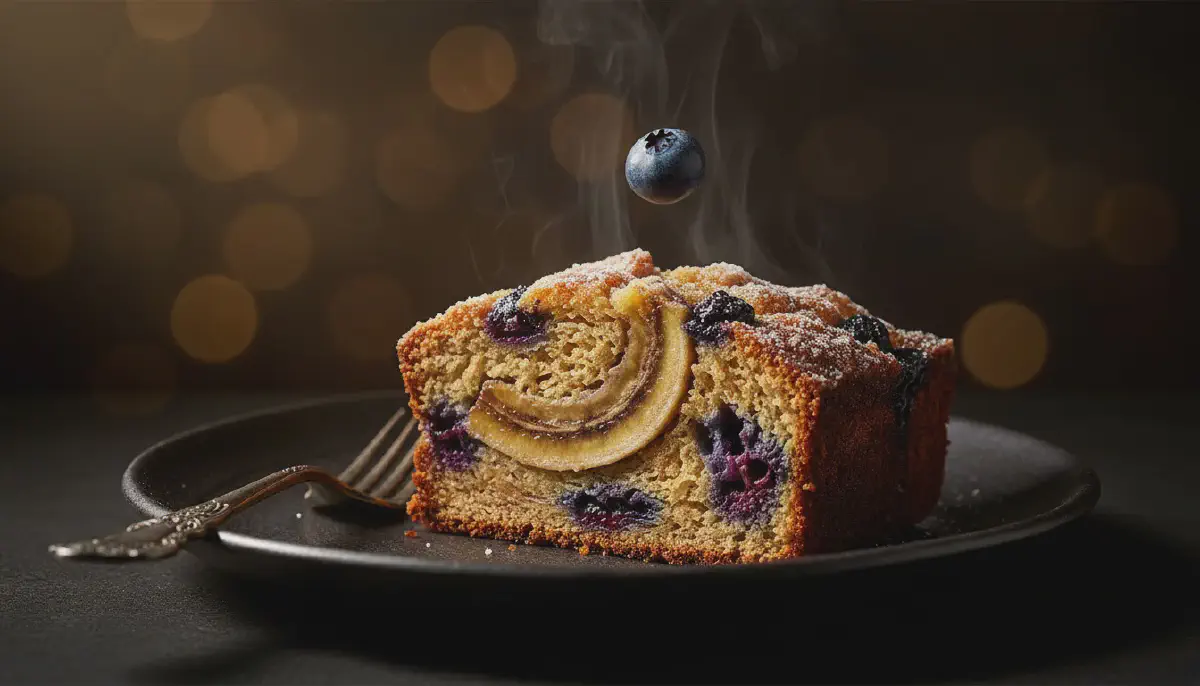
Stop sinking berries! Bake the ultimate Blueberry Banana Bread with my suspension technique. Insanely moist, jammy, and perfectly risen. Get the recipe now!
Forget everything you know about dry, lackluster quick breads where the fruit ends up as a soggy layer at the bottom of the pan. We are not making a simple snack here; we are engineering a masterpiece of hydration and suspension. This Blueberry Banana Bread is the result of years of testing the interplay between fructose, gluten structure, and thermal dynamics. We are aiming for a specific texture profile: a dense, tight crumb that remains incredibly moist for days, punctuated by exploding pockets of tart blueberry jam. This is the recipe that separates the home bakers from the culinary artists.
The Physics of the Crumb: Suspension & Hydration Dynamics
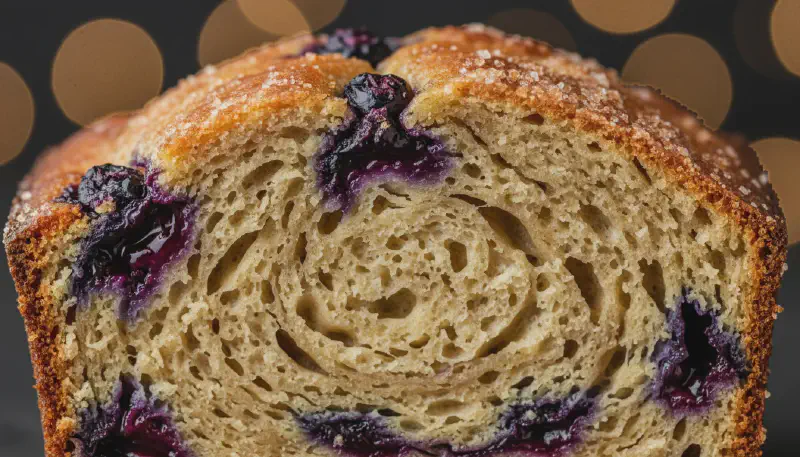
Why do most berry-loaded loaves fail? It usually comes down to two failures in culinary physics: structural weakness and incorrect density. A standard banana bread batter is often too loose to support the weight of a plump blueberry. As the fat melts and the gases expand in the oven, gravity takes over, pulling the heavy fruit through the weak gluten network to the bottom.
To combat this, we adjust the hydration ratio. We use melted butter for flavor, but we rely on the hygroscopic nature of brown sugar and the pectin in the bananas to lock in moisture without thinning the batter excessively. This creates a “high-viscosity” environment. When the batter is thick, the fruit stays put.
Furthermore, we are looking for the Maillard reaction—that browning of proteins and sugars—to create a crust that contrasts with the tender interior. This isn’t just bread; it’s a study in textural contrast.
Pantry Alchemy: The Critical Compounds
You cannot bake a world-class loaf with subpar inputs. Here is the science behind the selection:
- The Banana Variable: You need bananas that are past the point of “eating ripe.” We want black spots. Why? As a banana ripens, amylase enzymes break down starches into simple sugars (glucose and fructose). This not only sweetens the bread naturally but also increases the moisture content and tenderness.
- The Acid-Base Reaction: We use baking soda (sodium bicarbonate), not baking powder. Bananas are naturally acidic (pH 4.5-5.2). The baking soda reacts with this acidity to produce carbon dioxide gas, which lifts the heavy batter. If you swap this for powder, your loaf will be dense and flat.
- The Lipid Choice: Butter provides superior flavor compounds compared to oil, specifically diacetyl, which gives that rich “bakery” taste. However, we melt it to ensure it coats the flour proteins evenly, inhibiting excessive gluten formation for a tender crumb.
SOS Troubleshooting: Diagnostics for the Perfect Loaf
Even with the best recipe, variables like oven calibration and humidity can affect the outcome. Here is your diagnostic matrix for rescuing a loaf.
| Issue | The Root Cause | The Scientific Fix |
|---|---|---|
| The “Blueberry Bottom” | Gravity defeated friction. The batter was too thin or berries were slick. | The Flour Coat: Always toss berries in 1 tbsp of flour before folding. This increases surface friction coefficient. |
| The Gummy Center | Under-baking or “Starch Shock” (cutting too hot). | The Probe Test: Use a digital thermometer; internal temp should reach 200°F (93°C). Let cool for 1 hour to set starches. |
| The Burnt Crust / Raw Inside | Oven temperature too high; sugar caramelizing too fast. | The Aluminum Shield: Tent the loaf with foil at the 40-minute mark to deflect direct radiant heat while conduction finishes the center. |
| Dense, Rubber Texture | Over-developed gluten network. | The Fold Method: Stop mixing the moment the flour disappears. Lumps are your friends in quick breads. |
The Chef’s Vault: 5 Laws for Loaf Perfection
If you want to move from “good” to “legendary,” you need to apply these advanced techniques. These are the secrets I keep in my culinary vault.
- The Temperature Equilibrium: Ensure your egg is at room temperature. If you add a cold egg to melted butter, the butter will coagulate (seize) instantly, breaking your emulsion. A broken batter leads to a greasy, uneven loaf.
- The “Ghosting” Technique: As mentioned, coating the blueberries is non-negotiable. But don’t just dump flour on them. Toss them until they look like little ghosts. That dry outer layer bonds with the batter, locking the berry in place in the 3D matrix of the bread.
- The Resting Period: Allow the batter to sit in the pan for 10 minutes before putting it in the oven. This allows the flour to fully hydrate and the baking soda to begin its initial reaction with the banana acidity, improving the rise.
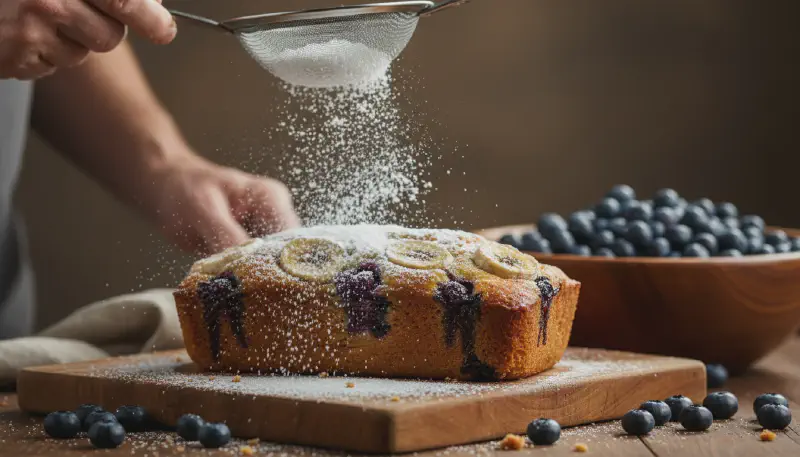
- The Sugar Crust Hack: Before baking, sprinkle a coarse layer of demerara or turbinado sugar on top of the raw batter. This creates a crunchy, bakery-style “muffin top” texture that shatters when you slice it.
- Understanding Carryover Cooking: Pull the bread when there are still a few moist crumbs on the toothpick. The loaf continues to cook for about 5-10 minutes after being removed from the oven due to residual thermal energy. If the toothpick is clean, the bread will be dry by the time it cools.
Ultra-Moist Blueberry Banana Bread: The Science of Bursting Berries
Ingredients
Instructions
- The Wet Emulsion: Preheat your oven to 350°F (175°C). In a large mixing bowl, whisk the melted butter and brown sugar until the mixture resembles wet sand. Add the mashed bananas, egg, and vanilla. Whisk vigorously for 60 seconds to create a stable emulsion.
- Dry Component Integration: In a separate bowl, sift together the 1.5 cups of flour, baking soda, and salt. Pour the dry ingredients into the wet mixture. Switch to a silicone spatula and fold gently. Stop when streaks of flour are still visible—do not overmix, or you will activate the gluten strands prematurely.
- The Berry Suspension Technique: In a small bowl, toss the blueberries with the reserved 1 tablespoon of flour until they are coated in a ghostly white dust. Gently fold these into the batter. This friction prevents the fruit from sinking to the bottom during the baking process.
- The Thermal Rise: Pour the batter into a greased 9x5 inch loaf pan. Bake for 55-65 minutes. At the 40-minute mark, check the color; if it is browning too fast, tent loosely with foil. The loaf is done when a toothpick inserted into the center comes out with a few moist crumbs attached, not wet batter.
Nutrition
Calories: 295 kcal | Protein: 5g | Fat: 12g | Sugar: 24g