The Science of Brown Bananas: Unlocking Nature’s Sweetest Baking Secret
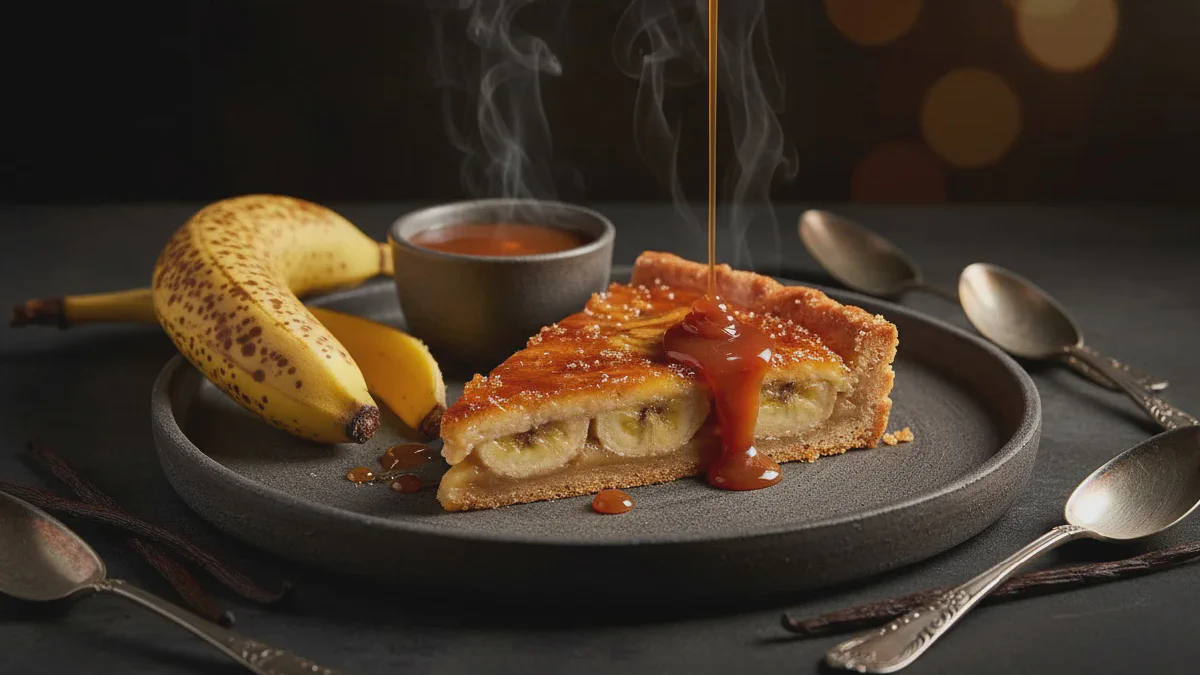
Master the culinary science of banana ripening. Learn how enzymatic browning boosts flavor, maximizes sweetness, and transforms your baking. Read the expert guide!
Stop throwing away gold. In the world of culinary science, there is perhaps no greater tragedy than a spotted banana ending up in the compost bin simply because of its aesthetic decline. As a culinary scientist, I look at a brown, spotted banana and I don’t see rot—I see a biological sugar factory that has completed its production cycle.
Most home bakers understand intuitively that brown bananas make better bread, but few understand the why. It isn’t just about softness; it is about a complex molecular transformation that changes the chemical landscape of the fruit. When you master the science of the “sugar spot,” you stop looking for recipes to use up old fruit and start intentionally aging your produce to achieve specific Brix (sugar) levels. This guide isn’t just about fruit; it’s about unlocking the enzymatic potential of your pantry.
Enzymatic Alchemy: From Starch to Liquid Gold
To understand why a brown banana is superior for baking, we have to look under the microscope. A green banana is biologically designed to survive; it is rigid, fibrous, and comprised of up to 80% resistant starch. To the human palate, it is astringent and chalky. This is the fruit in its storage phase.
The magic agent here is ethylene gas. As the banana respires, it releases ethylene, a plant hormone that signals the fruit to begin senescence (aging). This triggers the production of amylase, a powerful enzyme. Amylase acts as a demolition crew, smashing the long, complex chains of starch molecules into simple, short-chain sugars: glucose, fructose, and sucrose.
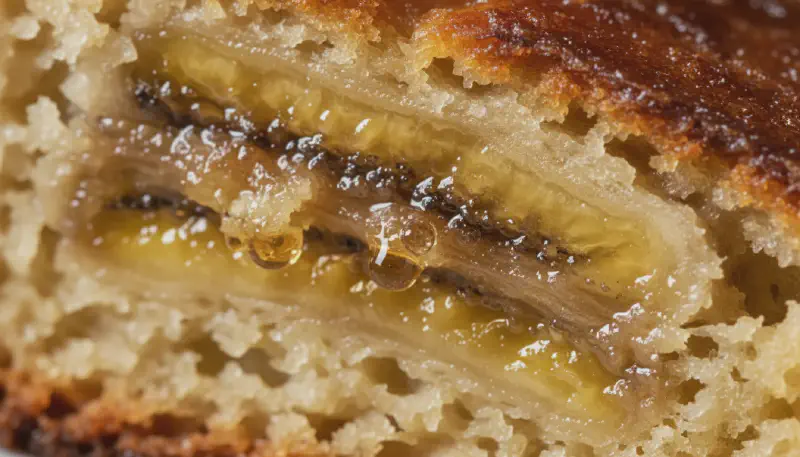
Those brown spots on the peel? They are not bruises. In the industry, we call them “sugar spots.” They indicate that the cell walls within the peel are breaking down and the conversion of starch to sugar is reaching its peak. A fully brown banana has converted almost all its starch into sugar, increasing its perceived sweetness by a factor of four compared to its yellow counterpart. Furthermore, as the pectin (the structural “glue” of the fruit) degrades, the texture shifts from structural to creamy, allowing for better incorporation into batters without over-mixing.
The Spectrum of Ripeness: Selecting the Right Stage
Not all brown bananas are created equal. As a chef, I categorize ripeness into distinct stages, each serving a specific culinary function. Using a yellow banana for muffins is a rookie mistake that results in dry, flavorless crumbs. Conversely, using a fermented black banana can introduce off-putting alcoholic notes.
- Stage 1: The Yellow-Green (The Starch Bomb): High in pectin and resistant starch. Use only for slicing onto cereal or savory plantain-style dishes. Zero utility in baking sweets.
- Stage 2: The Pure Yellow (The Table Banana): Balanced starch and sugar. Good for eating raw, but still too fibrous for a smooth batter.
- Stage 3: The Leopard Spot (The Sweet Spot): 50% yellow, 50% brown spots. This is the intersection of structure and sweetness. Ideal for pancakes where you want the banana to hold its shape slightly.
- Stage 4: The Full Brown/Black (The Baker’s Gold): The peel is thin and mostly black. The fruit inside is translucent and amber-hued. This is pure puree material, boasting maximum aroma and moisture content.
The Science of Brown Bananas: Unlocking Nature’s Sweetest Baking Secret
Ingredients
Instructions
- Selection & Peeling: Select bananas that are at least 50% brown or have heavy 'leopard spotting.' The stem should yield slightly to pressure. Peel carefully; the fruit inside should be creamy, translucent, and extremely aromatic, not dry or opaque.
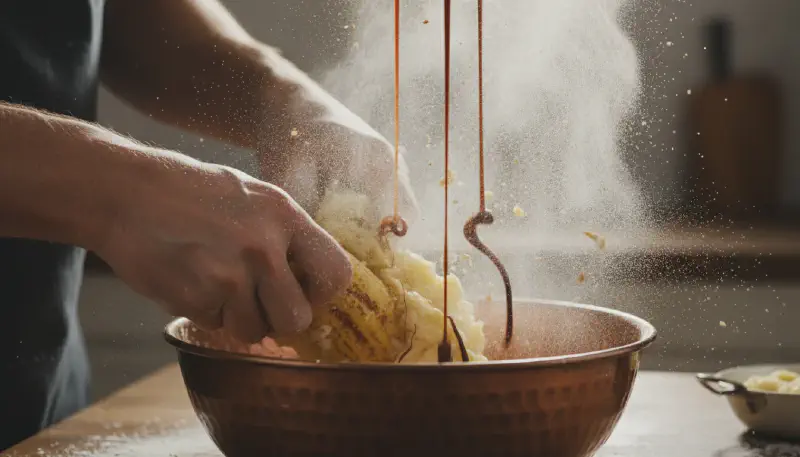
- The Textural Mash: Using a fork or potato masher, crush the fruit until it reaches a 'lumpy liquid' consistency. Do not use a food processor, as this breaks down the cellular structure too violently, resulting in a gummy baked good.
- Acidulation: Immediately stir in the lemon juice. This lowers the pH slightly, neutralizing the polyphenol oxidase enzyme and keeping the puree a vibrant beige rather than turning grey.
Troubleshooting the Ripening Process: When Good Fruit Goes Bad
Even with nature doing the heavy lifting, things can go wrong. The line between “perfectly ripe” and “rotten” is thin. Here is how to diagnose the condition of your fruit before adding it to your bowl.
| Issue | The Science (Cause) | The Fix |
|---|---|---|
| White fuzz on stem | Fungal growth due to trapped humidity near the pedicel (stem). | Salvageable. Cut 1 inch below the stem. If the flesh is clean, use it. If the rot penetrates the flesh, discard. |
| Alcohol/Vinegar Smell | Fermentation. Yeasts have begun consuming the sugars and producing ethanol/acetic acid. | Discard. This will ruin your bake with a sour, boozy flavor that does not bake out. |
| Fruit Flies Swarming | Ethylene and esters are powerful attractants for Drosophila. | Prevention. Once bananas reach Stage 3 (Leopard), move them to the fridge or freeze them peeled. |
| Hard Center in Brown Fruit | Uneven ripening, often caused by “chilling injury” if refrigerated too early. | Modify. Mash the soft parts; microwave the hard center for 15 seconds to soften, then mash. |
The Chef’s Vault: Pro Tips for Manipulation
You don’t always have to wait on nature’s timeline. Over my career, I’ve utilized specific techniques to control the ripening environment to suit my production schedule.
1. The Paper Bag Accelerator
If you need ripe bananas in 24 hours, do not leave them on the counter. Place them in a brown paper bag and roll the top shut. This traps the ethylene gas around the fruit, creating a feedback loop that dramatically speeds up the enzymatic process. Pro Tip: Add an apple to the bag; apples are super-emitters of ethylene and will kickstart the bananas.
2. The Freezing Fractal Effect
Freezing is the ultimate hack for banana bread. When water inside the banana cells freezes, it expands and jagged ice crystals puncture the cell walls. When you thaw the banana, the structure collapses completely, releasing a golden liquid. Never drain this liquid. It is concentrated banana syrup. Pour it all into your batter for a loaf that stays moist for days.
3. The “Oven Ripening” Myth
You will see hacks suggesting you bake yellow bananas to ripen them. I advise against this. Heat softens the texture by breaking down pectin, but it denatures the amylase enzyme before it can convert starch to sugar. You end up with a soft banana that tastes like a raw potato. Only use heat if the banana is already spotted and you just need it softer.
4. pH Balancing for Baking
Brown bananas are slightly acidic (pH 4.5-5.0). This is why most banana bread recipes call for Baking Soda (sodium bicarbonate). The acid in the fruit reacts with the alkaline soda to create carbon dioxide lift. If your bananas are not very brown, they lack this acid. In that case, add a teaspoon of lemon juice or buttermilk to your batter to ensure your leavening agent activates properly.
5. The Maillard Reaction Boost
Because brown bananas are high in simple sugars (fructose/glucose) rather than complex starch, they brown much faster in the oven due to the Maillard reaction. If you are using Stage 4 (Black) bananas, reduce your oven temperature by 25°F (approx 15°C) to prevent the crust from burning before the center is cooked.
The Science of Brown Bananas: Unlocking Nature’s Sweetest Baking Secret
Ingredients
Instructions
- Selection & Peeling: Select bananas that are at least 50% brown or have heavy 'leopard spotting.' The stem should yield slightly to pressure. Peel carefully; the fruit inside should be creamy, translucent, and extremely aromatic, not dry or opaque.
- The Textural Mash: Using a fork or potato masher, crush the fruit until it reaches a 'lumpy liquid' consistency. Do not use a food processor, as this breaks down the cellular structure too violently, resulting in a gummy baked good.
- Acidulation: Immediately stir in the lemon juice. This lowers the pH slightly, neutralizing the polyphenol oxidase enzyme and keeping the puree a vibrant beige rather than turning grey.
Nutrition
Calories: 200 kcal | Protein: 2.5g | Fat: 0.6g | Sugar: 28g