The Ultimate Golden Crust Banana Bread: Unlocking the Maillard Reaction Secret
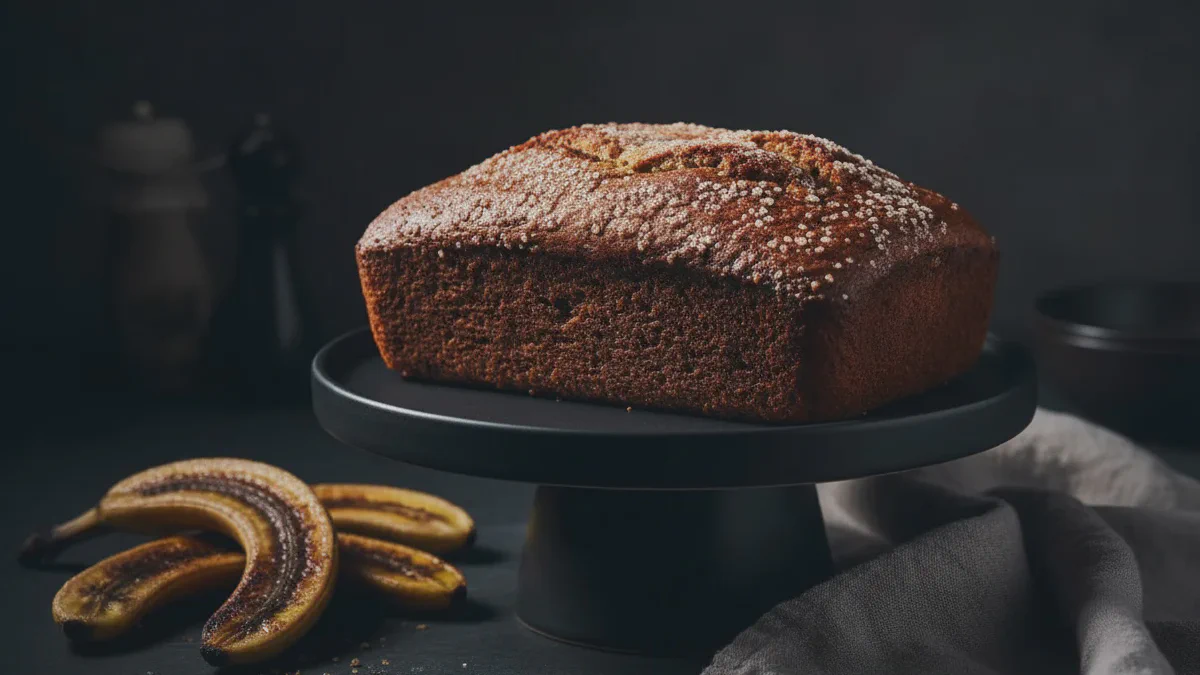
Stop baking pale, flavorless loaves. Discover the culinary science behind the Maillard Reaction to achieve a deep, nutty, perfectly golden crust on the moistest banana bread you've ever tasted.
There is a tragedy occurring in kitchens across the world: the acceptance of pale, beige banana bread. A loaf that is cooked through but lacks character, depth, and that signature aromatic complexity. As a culinary scientist, I can tell you that flavor is not just about ingredients; it is about reaction. Specifically, the non-enzymatic browning that transforms raw batter into a masterpiece.
If your banana bread doesn’t boast a deep, mahogany-colored crust that sings with notes of caramel, toasted nuts, and coffee, you aren’t tasting the recipe’s full potential. Today, we aren’t just baking; we are engineering the perfect environment for the Maillard reaction.
The Chemistry of Cravings: Why Brown Tastes Better
We often mistake “browning” for simply “cooking,” but chemically, they are distinct processes. The “golden crust” we covet is the result of the Maillard reaction—a chemical dance between amino acids (proteins) and reducing sugars (like the fructose in your bananas) under the influence of heat.
Unlike caramelization, which is strictly the pyrolysis of sugar, the Maillard reaction creates thousands of distinct flavor compounds. This is why a seared steak tastes better than a boiled one, and why a dark crust on banana bread offers a savory counterpoint to the sweet crumb. To achieve this, we need temperatures above 285°F (140°C) on the surface of the loaf.
Orchestrating the Reactants: Key Ingredients for Golden Perfection
To force the Maillard reaction to work in our favor, we have to manipulate the batter’s chemistry. It’s not enough to throw ingredients in a bowl; we must select them based on their reactivity.
- The pH Manipulator (Baking Soda): This is the secret weapon. The Maillard reaction occurs much faster in an alkaline environment. While baking powder is neutral, baking soda is basic (alkaline). By using baking soda, we raise the pH of the batter, accelerating the browning process significantly.
- The Reducing Sugars (Overripe Bananas): As bananas ripen, their starch converts into fructose and glucose. These are “reducing sugars,” which are highly reactive to heat. Green or yellow bananas will simply not provide the fuel needed for a deep crust.
- The Moisture Regulator (Fat): Butter solids (milk proteins) also participate in the Maillard reaction. Using melted butter rather than oil introduces more protein to the mix, resulting in a darker, more flavorful crust.
The Crust Clinic: Diagnosing Color Failures
If you have ever pulled a loaf out of the oven that looks sad and anemic, or conversely, charred like a briquette, you likely fell victim to one of these common variables.
| The Issue | The Scientific Cause | The Professional Fix |
|---|---|---|
| The “Ghost” Loaf (Pale) | Low pH or low oven temp. | Your baking soda is likely expired, or your oven runs cool. Buy fresh soda and use an oven thermometer. |
| The Soggy Top | Insufficient surface evaporation. | The oven wasn’t preheated long enough. The initial blast of heat is required to set the crust structure. |
| The Burnt Edges | High sugar conduction. | Your pan is likely dark metal, which conducts heat too aggressively. Reduce heat by 25°F for dark pans. |
| The Flat Crust | Protease enzymes. | You waited too long to bake after mixing. The soda reacted early, and the bubbles escaped. Bake immediately. |
From the Lab to the Oven: Professional Elevation Techniques
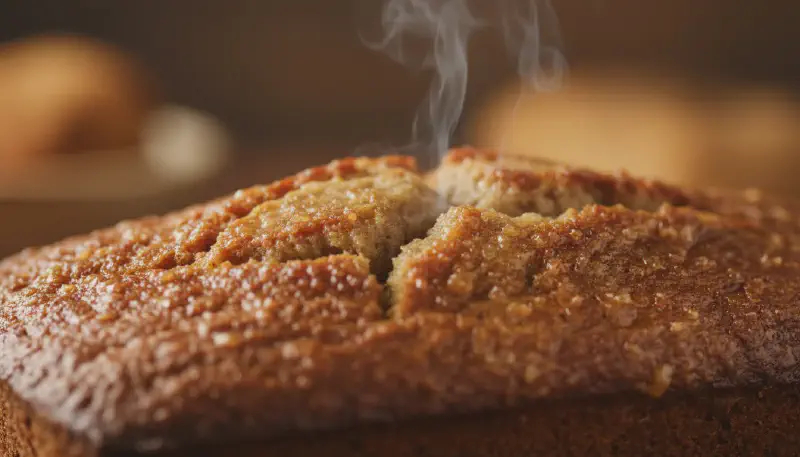
To truly achieve that bakery-style dome with the fissures of golden goodness, we have to look at the physics of the bake. The contrast is key. We want a crust that shatters slightly upon impact, revealing the humid, dense crumb beneath.
The “Sugar Shock” Method: One of my favorite tricks is sprinkling coarse Demerara or Turbinado sugar on top of the batter right before it enters the oven. These large crystals don’t melt entirely; instead, they undergo partial caramelization while creating friction. This friction, combined with the Maillard browning of the batter, creates a texture that is scientifically irresistible.
The Rack Position Protocol: Heat rises, but radiant heat from the bottom element can scorch the bottom of your loaf before the top is done. Always bake your banana bread in the middle of the oven. If you want a darker top crust, move the rack to the upper third for the final 5 minutes of baking, but watch it like a hawk.
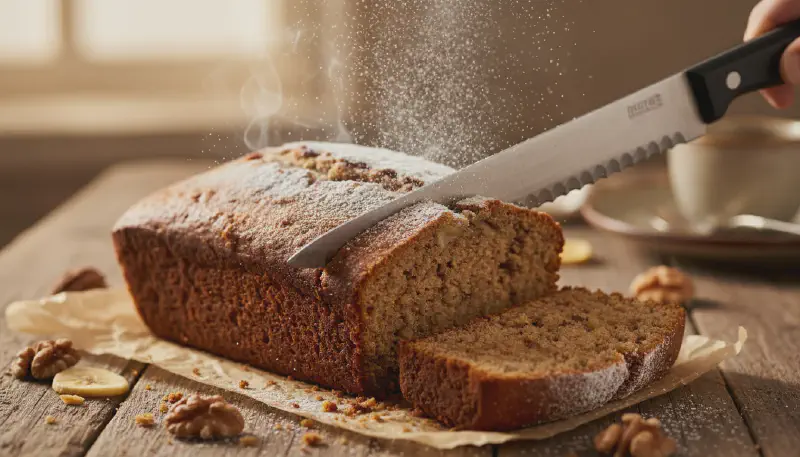
By understanding the science, we stop guessing and start controlling the outcome. That deep golden color isn’t just for show—it is the visual proof of flavor complexity. Now, go preheat that oven.
The Ultimate Golden Crust Banana Bread: Unlocking the Maillard Reaction Secret
Ingredients
Instructions
- The Alkaline Prep: Preheat oven to 350°F (175°C). Grease a 9x5 loaf pan. In a bowl, mash bananas until smooth but slightly chunky. Stir in the melted butter.
- Building the Reaction: Whisk in the brown sugar, egg, and vanilla. Sprinkle the baking soda and salt over the mixture and whisk vigorously. The baking soda will begin reacting with the acidity of the bananas immediately.
- Folding the Structure: Gently fold in the flour with a spatula until just combined. Do not overmix, or you will inhibit the rise. Pour batter into the prepared loaf pan.
- The Maillard Finish: Sprinkle Demerara sugar on top for extra texture. Bake for 55-65 minutes. The crust should be a deep mahogany brown (not black). Test with a toothpick. Cool for 10 minutes in the pan before transferring to a wire rack.
Nutrition
Calories: 295 calories | Protein: 5g | Fat: 12g | Sugar: 18g