Butter vs. Oil in Banana Bread: The Ultimate Texture Showdown Revealed
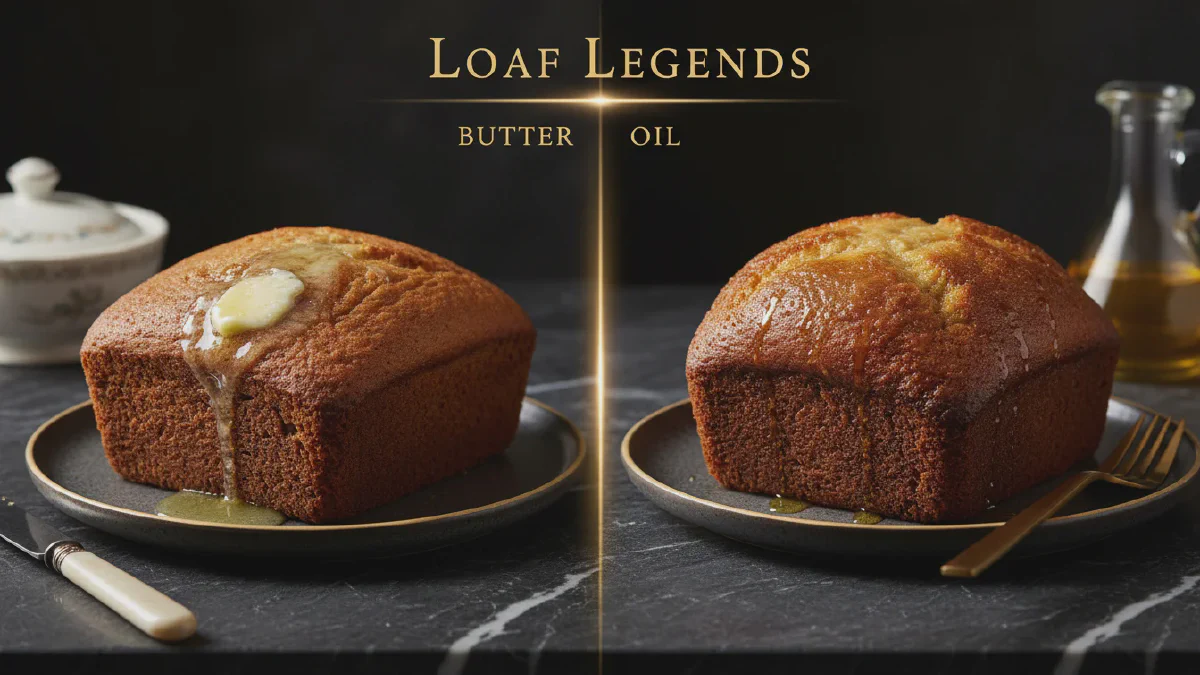
Unlock the secret to the perfect crumb. We break down the molecular differences between butter and oil in banana bread to help you choose between rich flavor and lasting moisture.
It is the eternal debate that divides home bakers and professional pastry chefs alike: when crafting the quintessential loaf of banana bread, do you reach for the stick of unsalted butter or the bottle of vegetable oil?
Most recipes treat them as interchangeable, but structurally, they are worlds apart. As a culinary scientist, I look at ingredients not just as flavor delivery systems, but as functional components that dictate the architecture of your crumb. The choice between butter and oil isn’t just about taste—it changes the hydration, the gluten development, and the shelf-life of your bake. Today, we are moving past “grandmother’s intuition” and looking at the hard data of baking physics.
The Micro-Structure of Moisture: A Tale of Two Fats
To understand the difference, we have to look at the molecular composition of your fats. This isn’t just baking; it’s chemistry.
Butter is an emulsion. It is approximately 80% fat, 16-18% water, and 1-2% milk solids. When you bake with butter, that water evaporates into steam, helping leaven the bread slightly, but also leaving the remaining crumb drier. Furthermore, because butter is a saturated fat, it is solid at room temperature. This results in a “cake-like” texture—lighter, fluffier, but firmer.
Oil, conversely, is 100% fat. It contains no water to evaporate. It remains liquid at room temperature. This means that an oil-based banana bread will always feel moister on the palate because the fat literally coats the tongue in a liquid state. It creates a denser, heavier loaf that inhibits gluten formation more aggressively than butter, resulting in a tender “melt-in-your-mouth” consistency that lasts for days.

Flavor Velocity vs. Textural Longevity
If oil is the king of texture, butter is the undisputed emperor of flavor. The trade-off is stark.
When you use a neutral oil (canola, vegetable, grapeseed), the fat takes a backseat. It acts purely as a moisturizing agent, allowing the banana, cinnamon, and vanilla to hit your palate instantly. The flavor is clean and sharp.
Butter, however, brings its own complex profile. The milk solids in butter undergo the Maillard reaction during baking—browning and creating nutty, caramel-like notes that oil simply cannot replicate. A butter-based banana bread tastes “richer” and more pastry-like.
The Verdict?
- Choose Butter if: You plan to eat the bread warm, fresh from the oven, and want a light, cakey crumb with superior flavor complexity.
- Choose Oil if: You want a loaf that stays moist for 4-5 days on the counter, has a dense, fudgy texture, and lets the banana flavor dominate.
Troubleshooting the Crumb: Why Your Loaf Failed
Even with the right fat, banana bread can be temperamental. Here is a diagnostic breakdown of common issues related to fat and mixing.
| The Symptom | The Scientific Cause | The Fix |
|---|---|---|
| Gummy/Dense Bottom | Excess moisture or under-baking. | If using oil, reduce banana quantity slightly or switch to 50/50 butter/oil. Ensure oven temp is accurate. |
| Tough, Rubber-like Crumb | Over-developed gluten. | Stop mixing the second the flour disappears. Fat coats flour proteins to prevent gluten, but over-mixing strips that protection. |
| Greasy Mouthfeel | Lipid saturation. | You likely used too much oil. Oil doesn’t evaporate; ensure you measure strictly. |
| Dry/Choking Texture | Lack of occlusive agents. | This usually happens with butter recipes baked too long. Check the loaf 5 minutes early. |
The “Baker’s Hybrid” & Professional Secrets
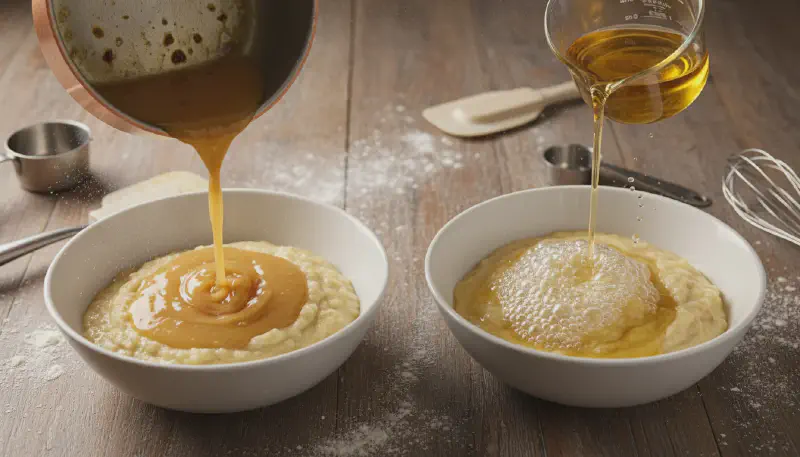
Why choose one when you can manipulate the chemistry of both? In professional test kitchens, we rarely use just one fat source for high-end muffins or quick breads. We use the Hybrid Method.
By using 50% melted butter (specifically browned butter for maximum flavor) and 50% oil, you achieve the holy grail of baking: the aromatic richness of dairy and the enduring moistness of liquid fat.
Storage Science
Your choice of fat also dictates storage.
- Oil Loaves: Can be refrigerated without turning hard. The unsaturated fats stay fluid.
- Butter Loaves: Must be stored at room temperature or reheated. If you refrigerate a butter loaf, the saturated fats crystallize, making the bread feel stale even when it isn’t.
Next time you have spotted bananas on the counter, don’t just follow the recipe blindly. Decide what kind of textural experience you want to create, and select your fat accordingly.
Butter vs. Oil in Banana Bread: The Ultimate Texture Showdown Revealed
Ingredients
Instructions
- The Prep Phase: Preheat your oven to 350°F (175°C). Grease a 9x5-inch loaf pan meticulously. If using butter, melt it now and let it cool slightly; if using oil, measure it out.
- The Wet Mix: In a large mixing bowl, mash the bananas until smooth. Whisk in your chosen fat (butter or oil). Add both sugars, the egg, and vanilla extract. Whisk vigorously until the batter emulsifies.
- The Dry Integration: Sift the flour, baking soda, salt, and cinnamon over the wet ingredients. Switch to a spatula and fold gently. Stop exactly when the last streak of flour disappears to prevent gluten over-development.
- The Bake: Pour batter into the prepared loaf pan. Bake for 55-65 minutes. The loaf is done when a toothpick inserted into the center comes out with only a few moist crumbs attached, not wet batter.
Nutrition
Calories: 245 kcal | Protein: 4g | Fat: 11g | Sugar: 18g